Jaws

September 30, 2011

Here is a media release from the City of Cape Town

MEDIA RELEASE
30 AUGUST 2011
Inshore movement of sharks: Safety for the
summer season
The City of Cape Town would once again like to remind all beach and
ocean users that we are approaching the time of year when we expect to
see a seasonal increase in the presence of white sharks in the in-shore
area.

This seasonal change is not unique to False Bay or recent in its
occurrence. Similar behaviour is recorded in Gansbaai, Mossel Bay and
even California.

Shark sightings recorded by the shark spotters have consistently shown a
seasonal peak during the period from August to March, peaking in mid-
summer. Typically shark sightings start in late August. However, shark
spotters and water users have recorded early sightings in the last two
weeks in Muizenberg, St. James and Clovelly.

White shark research trips over the weekend recorded a significant drop
in shark activity at Seal Island, indicative of the seasonal move of sharks
away from the island to the in-shore areas. The City is therefore
appealing to all beach and ocean users to be aware of these recent
sightings and the expected increase in shark presence in the in-shore
area over the summer months.

I was walking the dog on Muizenberg beach the other day when the sirens sounded and the white flag was raised. (Why white? I would have thought red would be better.) Most of the surfers and bathers left the water, but a few ignored the warning and stayed in the surf. They were fortunate they weren’t eaten.

Great White Shark


Yesterday, a similar thing happened at Fish Hoek on the Clovelly end of the beach. Sirens, flags, but one person, Mr Michael Cohen, chose to ignore them. He wasn’t as lucky as his foolhardy fellows in Muizenberg, and he is now in the Constantiaberg Clinic with his right leg considerably shorter than the left.
Read the rest of this entry »


Base Stations Again

September 2, 2011

Let me say at the outset that I am not a fan of cell phones. In my view these anti-social devices have done more to damage quality of life (and, when in the hands of moronic drivers, to actually end life) than any other modern invention. It is no longer possible for me to enjoy a day at the beach, or a romantic dinner without being irritated by the constant ring tones and inane, high-decibel chatter of those around me, or, much worse, by my pointy-haired boss who is so dim he thinks an after hours computer error is an emergency, despite the fact that no one will die or even feel vaguely queezy because of it. No one would be happier than I if the damn things were swept off the face of the planet once and for all, but I am reluctantly forced to take up a position in their defence against the plethora of hogwash currently being spouted about their effect on health. Read the rest of this entry »


Piracy and Copyright

August 23, 2011

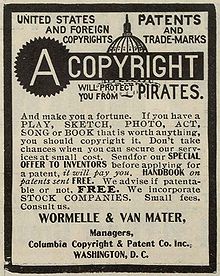
Most people will be familiar with that annoying, unskippable anti-piracy film that makes inane and impertinent statements (you wouldn’t steal a car, &c) to make its point that piracy of films is stealing. Well, I wouldn’t steal a car, or a handbag, or even a movie, but this has nothing to do with piracy because contrary to the opinion of the Motion Picture Association of America (MPAA), which is the organisation that I believe made the film, piracy is not stealing.

The US Supreme Court, ruling in the case of Dowling v. United States in 1985 said that

…interference with copyright does not easily equate with theft, conversion, or fraud. The infringer of a copyright does not assume physical control over the copyright nor wholly deprive its owner of its use. Infringement implicates a more complex set of property interests than does run-of-the-mill theft, conversion, or fraud.

The purpose of copyright law is to ensure that the originators of creative works profit from their labour and thus encourage the creation of such works. Piracy undermines that goal, and is therefore punishable in law. The problem faced by copyright holders in the digital age is that it is almost impossible to prevent people from making easy, cheap copies of their work, which makes copyright law extremely difficult to enforce.
Read the rest of this entry »


Mr Hitchens Rests His Case

August 4, 2011

Peter Hitchens recently set forth in his blog his arguments against the legalisation of drugs in general and cannabis in particular. These are so hare-brained, so monumentally stupid, so hideously wrong and so asininely arrogant that I’m unable to resist countering them. Here are a few quotes from his rant.

Peter Hitchens

…my fear that the general legalisation of mind-altering drugs produces passive and easily manipulated citizens.

Read the rest of this entry »


Sam Harris v Mandy De Waal

July 29, 2011

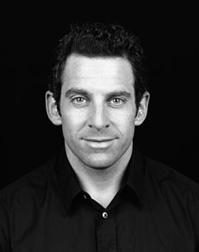
There seems to be a lot of Sam Harris bashing of late, and the latest example of this is Mandy De Waal’s “Islamophobia and Sam Harris’ tyranny of ‘reason’” in the Daily Maverick.

Sam Harris

Her article is, on the face of it, an attack on Harris’ anti-Islam stance, but a cursory analysis of the language she uses reveals that it is an attack on atheism and atheists in general. For example she says that Harris “intellectually clubs spiritual ‘gurus’ like Chopra, in much the same way fur hunters club baby seals.” Just to make sure we get the point that the spiritual and religious are cute and cuddly and atheists are filled with adamantine ruthlessness, she goes on in the following paragraph: “Intellectually clubbing seals is a practice fairly common among atheists”. She quotes Alister Mcgrath who called Richard Dawkins “Darwin’s Rottweiler”, promotes Harris’ atheism to a more general “misanthropy”, claims that Harris “grinds in the heel of hatred”, describes his followers as “rabid”, and his ideas are “hate speech”.
Read the rest of this entry »


Women and Sick Leave

July 7, 2011

There has been a major brouhaha in New Zealand over the last couple of days over remarks made by the CEO of the Employers and Manufacturers Association, Alisdair Thompson. He cited sick leave as the reason for women being paid less than men.

Who takes the most sick leave? Women do, in general. Why? Because once a month they have sick problems. Not all of them, but some do. They have children that they have to take time off to go home and take leave of. Therefore it’s their productivity. It’s not their fault.

It wasn’t long before there was a paroxysm of outrage from feminists and Mr Thompson joined the ranks of the unemployed.

But was he right? Do women take more sick leave than men, and is it justifiable to pay them less than men for that reason?

Statistics are available for several countries, including New Zealand. Here are some of them:

  • In the New Zealand civil service in 2010 men took 6.8 days sick leave and women took 8.4 days on average.
  • In a 2004 survey in the UK, on any given day an average of 1.4% of men and 2.1% of women were on sick leave.
  • Swedish data indicate that women take about 1.5 days sick leave per quarter against 1 day for men.

So the statistics say that women are off work due to illness about 2 days per year more than men. Assuming that there are 200 working days per year these figures would justify a difference in salary of about 1%, not the 12% differential that actually prevails in New Zealand.

However, I don’t believe for a moment that the reason women are paid less has anything to do with sick leave, as Mr Thompson probably knows. The real reason is simply that women are prepared to work for less, and companies, as any wage slave knows, will pay the minimum amount possible to keep workers at their desks or machines.

Is it moral to discriminate against a group of people based on some statistical characteristic of that group? My every instinct says no, that people should be treated as unique individuals who should be judged on their own individual qualities. For example, some motor insurance premiums are higher for male drivers because statistically men have more accidents than women. I feel aggrieved because in the roughly four decades I have been a driver I have only claimed once, and that was because my car was kicked by a horse. I don’t hear mens’ liberationists (masculinists?) going into spittle-flying rages about this, or the CEOs of insurance companies being fired because of it.

But then it’s fine to be sexist provided you are a woman, and it’s OK to be a racist as long as you’re black.

Creative Commons License
Grumpy Old Man by Mark Widdicombe is licensed under a Creative Commons Attribution-Noncommercial-No Derivative Works 2.5 License

//


Euthanasia II

June 15, 2011

A couple of weeks ago Jack Kevorkian, a.k.a. “Doctor Death”, died from complications of liver cancer. Today we have news that Terry Pratchett, the esteemed science fiction author of the Discworld series, is suffering from early onset Alzheimer’s disease, and is campaigning for the right to end his life when and where he likes.

Jack Kevorkian


Well, why shouldn’t he? There seem to be two arguments against any individual choosing the time and manner of his own death: religious, and some variant or other of the “slippery slope”.

The religious argument is simple: only God can ordain the time of our death, and to pre-empt God is a mortal sin. Also inextricably tied into this argument is the notion that humans are fundamentally different to animals by virtue of the possession of a soul, and that what might be “humane” for animals must be rejected for humans on account of our special status.

The slippery slope arguments come in two broad categories. The first goes something like this: “If we allow people who are terminally ill to commit assisted suicide, then we’ll have people doing it who are just depressed or having a bad day.” The second is usually framed as the concern that relatives of the euthanasee might take the opportunity to bump off granny in order to get their avaricious hands on her chattels before she is ready to go, or that granny may feel she’s a burden to her family, so she undergoes assisted suicide as a considerate means of relieving that perceived burden.

I side with Kevorkian and Pratchett in this matter. Neither of the arguments mentioned above hold water, and even if they did they are trumped by a much more compelling moral argument.

The religious wish to impose the sovereignty of their god on everyone, whether or not they believe in that particular god. I do not believe in the existence of any gods, so obviously I must reject as absurd any attempt on the part of the religionists to impose their superstitions on any aspect of my life; and I must oppose as unconstitutional any laws that entrench religious ideals. I find the very notion that we assist animals to die painlessly when their pain becomes severe and call that “humane”, but refuse that same consideration to humans contrary to every tenet of morality, but that does not surprise me–the religious know very little about morality, and what they do know is distorted by the lens of their hand-me-down beliefs.

Slippery slope arguments can be disposed of quite easily simply by exposing the fact that they are straw men; they are objecting to matters that are not even on the table–no one is espousing murder, merely individual freedom of choice.

Which brings us to the clinching, in my view, moral argument. If we value the “right to life” as entrenched in the constitution, then we must acknowledge the concept of ownership of one’s life and body. Who owns your life and body? The church? Your neighbour? The state? Obviously not. You own it, and therefore you must be the sole arbiter of its final disposition. The corollary to this is that any law that attempts to prevent you from exercising your rights over your body is immoral and should be struck from the statute books, and the prosecution of those assisting others to die should be stopped immediately.

I see that the Catholic church saw it as “both ironic and tragic” that Jack Kevorkian did not himself resort to assisted suicide in his final days. Why? They miss the point entirely. He did not choose to do so, but he should have permitted to so choose if he wished. The religionists really don’t seem to able to get a handle on the logic of this argument at all.

Creative Commons License
Grumpy Old Man by Mark Widdicombe is licensed under a Creative Commons Attribution-Noncommercial-No Derivative Works 2.5 License


Drugs

June 6, 2011

The boarding school I attended when I was a small boy employed a Scottish matron to look after our medical welfare. She was rectangular, about four feet tall, had a broad lowland Scots accent, a face like a haggis and a loving heart, not that she would ever own up to that. Whenever we went to see her she would listen to our sad stories, then give us a large, round, blue pill. I always felt much better after this, and attributed the improvement to the pill. With hindsight, I’m sure the pill was nothing more than a multivitamin, and the talk conspired with the placebo effect to produce the improvement in mood. This is only tangentially relevant to my topic for today, which is illegal drugs and the relationship between their users and governments.

Judi Dench


Last week luminaries such as Judi Dench, Sting and Richard Branson expressed their view that the so-called war on drugs was a failure, and that use of illegal drugs should be decriminalised. Well, guys, thanks for pointing out the obvious–obvious to everyone, that is, apart from those legislators who persist in the delusion that they can legislate human nature.

The arguments for decriminalisation are practical: a huge amount law enforcement resources are diverted from fighting other crimes; outrageous profits on illegal drugs mean that the market is perfectly suited to exploitation by organised crime; the trade in illegal drugs cannot be regulated, so their consumers risk injury or death from poor quality merchandise; users are cast out of mainstream society and live dangerously, sharing needles and other kinds of risky behaviour.

In my view Dench et al don’t go far enough. Illegal drugs should not be decriminalised, they should be legalised. Apart from all the reasons given above for decriminalisation, there are compelling moral arguments for legalisation. The first is the lack of consistency in the law. There are no logical reasons why some drugs, such as alcohol and tobacco should be freely available to adults when less harmful substances such as cannabis are illegal. Secondly, there is the question of freedom: if you wish to have a free society, then adults should have freedom over their own bodies, which means the freedom to ingest any substance they like without being dictated to by the state. The function of government is to protect citizens’ rights against other people, not themselves. Free people must have autonomy over their own lives, and suffer government interference only when they infringe the rights of others.

Cannabis grow room (with rozzerette)


“But the the health system won’t be able to cope with millions of addicts!” critics will cry. This is simply untrue–the national fiscus takes in much more from taxes on the sale of alcohol than they expend on treating the fairly small proportion of drinkers who descend into alcoholism. Any drugs can be taxed in the same way as are tobacco and alcohol now, and the profits go to government (disorganised crime) instead of to the criminal cartels. Cynics or conspiracy theorists might make the point that government allows the sale of alcohol and tobacco because it saves a considerable amount of money; the best outcome for government is everyone dropping dead at their retirement parties, saving a fortune in pensions and geriatric care. A legal market in drugs can be regulated by health authorities, ensuring suppliers perform adequate quality control, and that users can be confident of the doses they are purchasing.

I’m sure that somewhere in the back of Richard Branson’s mind is the outline of the advertising campaign he will run upon the launch of Virgin Psychedelic, and the profits he will make out of marketing cheap, high quality product to an appreciative public.

Creative Commons License
Grumpy Old Man by Mark Widdicombe is licensed under a Creative Commons Attribution-Noncommercial-No Derivative Works 2.5 License


Stokes Croft Riots

May 26, 2011

A small branch of the supermarket Tesco opened in Stokes Croft, a neighbourhood in Bristol in April. This was not a giant hypermarket, it was a Tesco Express, something like Apu’s Quik-E-Mart in The Simpsons.

Riot damaged Tesco Express


Some residents in the area were horrified. They claimed that the new store would destroy existing small businesses, and that “big capitalism” was being imposed on them. Their opinions were not taken seriously, and the opening of the new store went ahead.

Those opposed to the store have this to say:

Within a week of Tesco opening its doors Stokes Croft has found itself the focal point of serious violence and confrontation. Over the last few years our beloved community has undergone an amazing home grown resurgence. We are therefore devastated that Tesco’s refusal to listen to what the majority of local people want has resulted in our vibrant, peaceful community being subject to such a sad state of affairs.

This “majority” decided that violence was the best method of enforcing their wishes, so they took to the streets. Their website goes on:

We are also deeply saddened to witness the reality that we live in society in which young people feel the only way to see justice done is to throw rocks. The reality is the government / corporations / media have created this society and are now trying to blame young people for the mess they have created. What future can we hope for if corporations are allowed to continue to dictate governments? If their insatiable appetite for profit is allowed to reign supreme?

Clashes between protesters and police left many injured and extensive damage to property, including to the disputed store.

What bothers me about this is that the protesters are either lying about their motives or they show an almost unbelievable ignorance of economic forces.

If they are truly in the majority, they could easily close the store down simply by not shopping there. The store would lose money, and Tesco, with its “insatiable appetite for profit” would close its doors and try again elsewhere.

But I suspect that they are not in any sort of majority and they wish to impose their political agenda on everyone else through the use of force. There may well be a silent majority of residents in the area who would appreciate the convenience of being able to buy reasonably priced goods at the new store, and the protesters are well aware of this fact.

This is morally indefensible and I hope the Avon and Somerset constabulary stand firm in their commitment to uphold the law.

What future can we hope for if a few malcontents are allowed to dictate, by violence and coercion, to corporations and governments?

Creative Commons License
Grumpy Old Man by Mark Widdicombe is licensed under a Creative Commons Attribution-Noncommercial-No Derivative Works 2.5 License


Rapture II

May 23, 2011

So, here we are (still). Unraptured, unsubjected to the tortures of hell on Earth we were promised by the grade A, Crackpot First Class Harold Camping. The papers are full of sob stories about the morons who bought into this nonsense and now have to face the consequences.

Last Judgement


Last week I expressed some sympathy for the likes of the Martinez family, but this week, after reading the bleatings of the faithful, I’ve changed my mind.

There are a crowd who rented 50 rooms in an expensive hotel to await Jesus, believing they would never be presented with the bill. How stupid can you get and still go about on your hind legs? These bloody fools deserve nothing but contempt and ridicule, and the more of that that is heaped upon them, the less likely will it be that others will believe the next Camping, or even this self same Camping when he amends his ridiculous calculations again.

Last week I mentioned the fact that yelling “fire!” in crowded auditorium is not protected speech under any sane constitution, and likened Camping’s absurd statements to just that situation. I sincerely hope someone in the US brings a prosecution against him, and a jury finds him responsible for some of the harm he has done.

Then he can finish his days in a lunatic asylum, where he should have been confined a long time ago.

Creative Commons License
Grumpy Old Man by Mark Widdicombe is licensed under a Creative Commons Attribution-Noncommercial-No Derivative Works 2.5 License